如图所示,9个盘子排成圆圈,八个盘子中有蚱蜢,一个空盘,每只蚱蜢可以跳到相邻的空盘中,
或者隔一只蚱蜢跳到空盘上,从当前状态到 1-8 换位, 2-7 换位….至少经过多少次跳跃
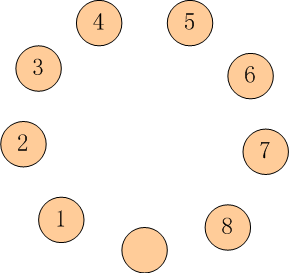
分析
这个问题可以转化为图论问题,以图所示状态为起始状态,通过广搜,求出到目标状态的步长.
状态的表示,由于图上为一个环形,所以用字符串表示状态,字符串索引时表示为环形数组.
1
| #define INDEX(i) (((i) + 9) % 9)
|
状态转移时将空盘与左右相邻四个字符每个交换一次产生新状态,判断是否到目标状态,将每个状态加入到一个 set 中去重,每次深入一层便将 steps 加一,最后当到达目标状态后,返回 steps 计数
完整代码
1
2
3
4
5
6
7
8
9
10
11
12
13
14
15
16
17
18
19
20
21
22
23
24
25
26
27
28
29
30
31
32
33
34
35
36
37
38
39
40
41
42
43
44
45
46
47
48
49
50
51
52
53
54
55
56
57
58
59
60
61
62
63
64
| #include <string>
#include <vector>
#include <unordered_set>
#define INDEX(i) (((i) + 9) % 9)
static int steps = 0;
static std::unordered_set<std::string> graph;
static std::string start;
static std::queue<std::string> layer;
static int layer_start = 0;
static bool breadth_search(const std::string& node)
{
int empty_pos = static_cast<int>(node.find('0'));
for(int i = empty_pos - 2; i < empty_pos + 2; ++i)
{
std::string child = node;
std::swap(child[INDEX(i)], child[INDEX(empty_pos)]);
if (child == "087654321")
{
return true;
}
if (graph.count(child) == 0)
{
layer.push_back(child);
graph.insert(child);
}
}
return false;
}
int insect_jump()
{
start = "012345678";
layer.push_back(start);
graph.insert(start);
layer_count = 0;
step = 0;
while (true)
{
if (layer_count == 0)
{
++steps;
layer_count = static_cast<int>(layer.size());
}
std::string node = layer.front();layer.pop();
if (breadth_search(node))
{
break;
}
--layer_count;
}
return steps;
}
|